10 Inspiring Korean Lunar New Year Books for Kids
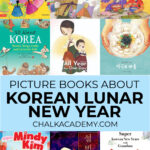

Although my kids live far from their Korean grandparents, stories connect them with our family’s culture. Thanks to wonderful books, my children can learn how the Lunar New Year is celebrated in Korean culture. In Korean, Lunar New Year is called 설날 Seollal, and the holiday involves wearing a 한복 hanbok, sharing delicious meals, playing games, and performing a bow called 세배 sebae. These Korean Seollal books are great for preschoolers, kindergartners, and children in elementary school to learn about Lunar New Year traditions.

Chalk Academy is reader-supported. Some of the links are affiliate links. When you buy something through an affiliate link, we may earn a very small commission at no cost to you. Details here.
Best picture books about the Korean Lunar New Year
These touching stories are our favorite to read aloud when I teach about the Korean Lunar New Year at my children’s school.
Tomorrow Is New Year’s Day: Seollal, a Korean Celebration of the Lunar New Year

English edition:
Flip to the first page, and you’ll recognize the scene: a child rolling around, refusing to wear clothes his parents picked out! It’s Lunar New Year (Seollal), and everyone in this Korean American family is supposed to wear traditional hanboks.

I love this relatable story of a family finding a way to celebrate Lunar New Year, not only at home, but also at their children’s school. The teacher and friends are welcoming and excited to learn about how Lunar New Year is celebrated in Korean culture, including customs like bowing, games, and special foods. An origami activity and bilingual glossary are also included.
Let’s Celebrate Korean New Year!

English edition:
As two sisters prepare for the holiday, make yummy dumplings, play Yutnori, and create cards for their grandparents, the importance of family traditions shines through the heartwarming storytelling and beautiful illustrations. This sweet Seollal book concludes with a yummy dumpling recipe you can try at home!
Dumpling Soup: A Lunar New Year Story for Mixed Asian Families

English edition:
This Lunar New Year story is one of my children’s absolute favorite stories, and the realistic illustrations are beautiful! A little girl, Marisa, shares about her diverse family in Hawaii. In addition to their Korean heritage, her family also has a blend of Japanese, Chinese, Hawaiian, and American cultures.
As the family cooks and prepares the New Year’s meal together, we learn about special meals, such as 만두국 (manduguk / dumpling soup). Although 떡국 (tteokguk / rice cake soup) is the quintessential New Year dish in Korean culture, Dumpling Soup shows that every family makes their own holiday traditions.
Wish Soup: A Celebration of Seollal

English edition:
This lighthearted story begins with an all-too-familiar sibling rivalry during the Lunar New Year. Big sister Sohee wants to sit down and devour 떡국 (tteokguk), Korean rice cake soup, which is the most important symbolic dish for New Year’s Day. She wants to grow up and believes that each bowl of soup will help her become a big girl. Before she can take a sip, she’s called away to various chores, while her sneaky little sister Somi finishes her bowl. Through this dilemma, Sohee learns that her help with Lunar New Year preparations is what growing up and being part of a loving family is all about.
Try this: Teach Your Child a Second Language at Home with 5 Key Steps
All Year for One Day

English edition:
Author Tiffanie Lee self-published a gorgeous book about the Lunar New Year and common traditions in a Korean-American Family.
Special meals like rice oval soup are highlighted, and the big, familiar box of Korean pears in the illustrations did not go unnoticed!
While most of the book is in English, the Korean greeting 새해 복 많이 받으세요 (saehae bog manh-i bad-euseyo / Happy New Year!) is included during the bowing tradition.
New Clothes for New Year’s Day 설빔

English edition:
Korean edition:
This picture book by Hyun-joo Bae shows how to wear Korean hanboks and style hair for Lunar New Year. The book was originally published in Korean and later translated into English. One version of the book focuses on traditional girls’ clothing, while the other version features boys’ attire. Unfortunately, the English version of the book is out of print, but keep an eye out for used copies on eBay and Thrift Books.
Good news: the Korean edition with the boy protagonist has been narrated on YouTube! In the videos for each book, you’ll see differences in the little brother and big sister’s clothing, their developmental levels, and their personalities. The girl dresses herself with ease, while the boy playfully struggles and is proud when he figures it out.
Related: Where to Buy Korean Books for Kids in the United States
Books about Lunar New Year and other Korean Festivals
Lunar New Year: A Peek Into Traditions Around the World
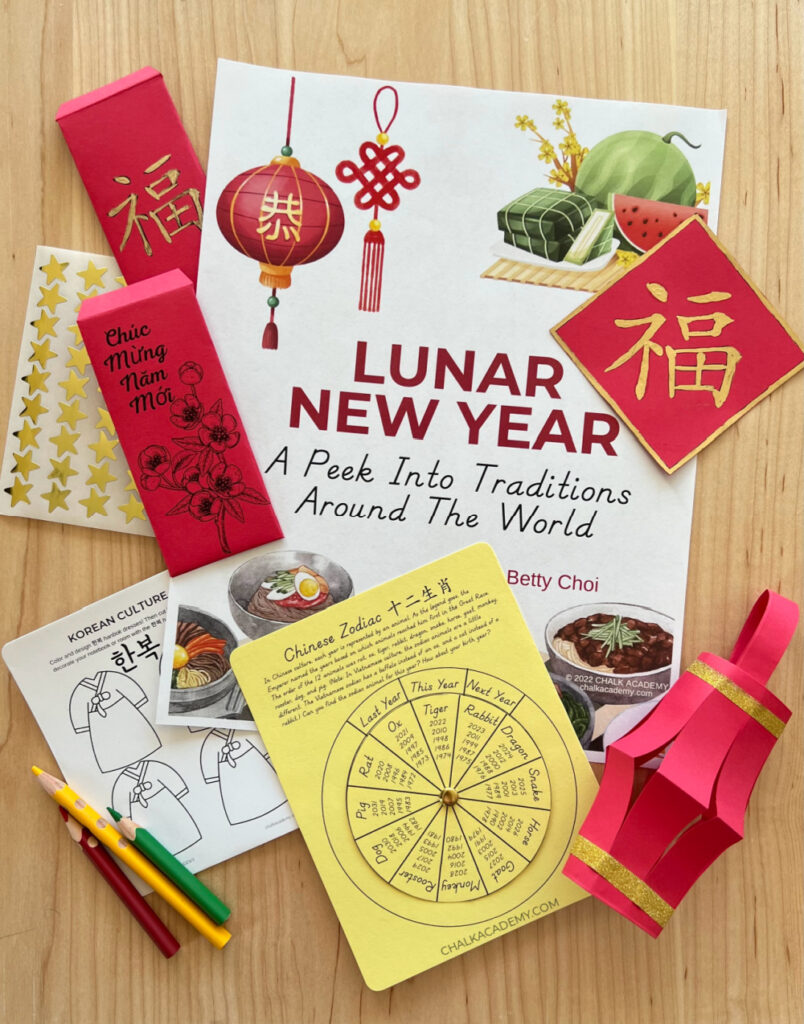
Lunar New Year: A Peek Into Traditions Around the World is the most comprehensive and inclusive book on this topic for children of all ages. This printable book teaches about Korean Seollal as well as Chinese and Vietnamese Lunar New Year traditions through kid-friendly summaries and fun, hands-on activities.
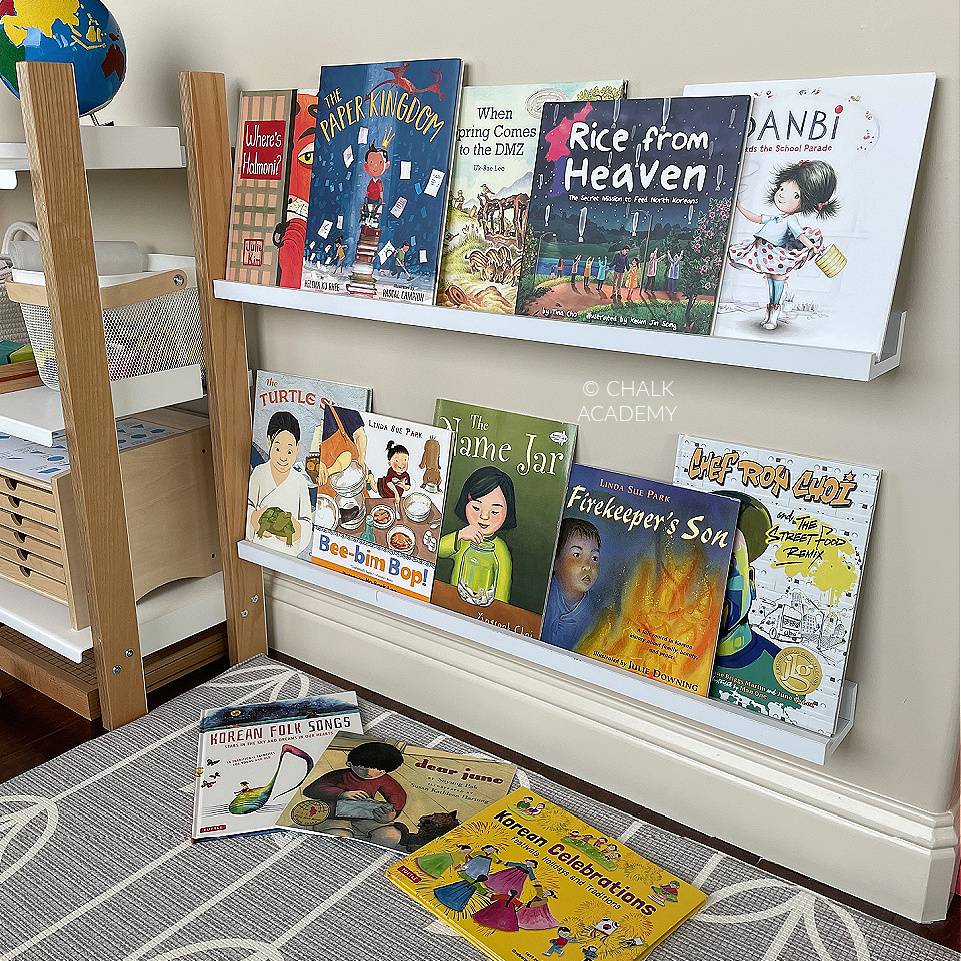
Korean Celebrations: Festivals, Holidays, Traditions

English edition:
Korean-American author Tina Cho wrote this helpful overview of famous holidays, including Lunar New Year, Children’s Day, Pepero Day, Hangeul Day, and 100 Days Birthday. Kids can have fun learning about traditional Korean games through the following hands-on activities:
- DIY 윳놀이 yut-nori game for 설날 Seollal
- Recipe for 송편 songpyeon for 추석 Chuseok (Korean Harvest Moon Festival)
- How to make a paper fan
- Make a paper carnation for 어버이 날 Parents’ Day
Listen to this: 100+ Popular Korean Children’s Songs and Nursery Rhymes
All About Korea: Stories, Songs, Crafts, and Games for Kids

English edition:
All About Korean is written by Ann Martin Bowler, an educator and mother of two adopted Korean children. Similar to Korean Celebrations, this book summarizes important Lunar New Year traditions and other cultural games, crafts, songs, stories, and recipes. Activities include:
- Play jegi (Korean hacky-sack), 공기 gongi (Korean jacks), 윳놀이 yut nori
- Sing 아리랑 Arirang, Head Shoulders Knees and Toes, and other popular Korean children’s songs
- Say a few common Korean words/phrases
- Read short Korean stories (eg, Taming a Tiger, Two Foolish Green Frogs)
- Make yummy recipes like 김밥 kimbap and 송편 songpyeon
Read this: Best Korean Picture Dictionaries for Kids and Parents!
Korean chapter book about Lunar New Year
Mindy Kim and the Lunar New Year Parade
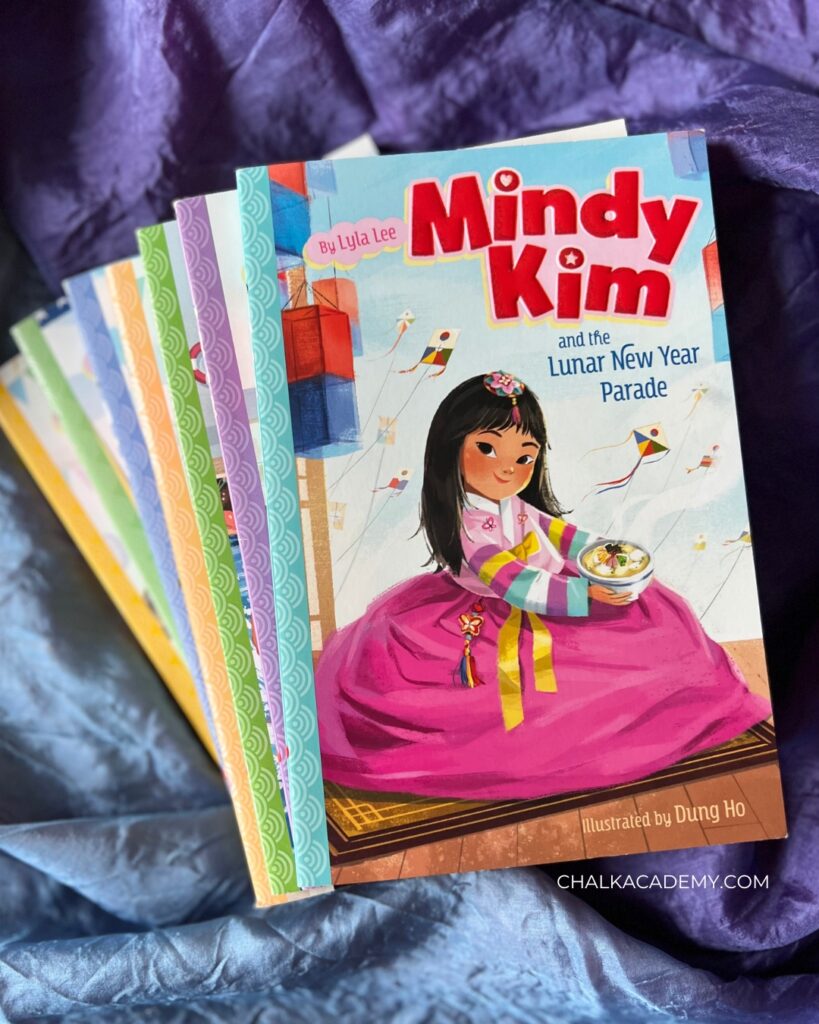
English edition:
This poignant chapter book is about an 8-year-old Korean-American girl who recently moved to a new state with her dad after her mom passed away. She learns to make new traditions for the Lunar New Year with her dad and new friends. All of the books in the Mindy Kim series are geared for children aged 6 to 9 years or students reading at a first to fourth grade level.
What are your favorite Korean New Year books for kids?
Which books about the Korean New Year did your kids like? What other books about Seollal do you recommend? Please share your thoughts in the comments. We’d love to learn from you!
dumpling is chinese mandu name.
we are called the name ‘MANDU’
everything so good. but just one thing.
my opinion is. it’s going to be education about korean culture. so have to be more care about the name..
i wish the book names ‘ManDuGug’ not Dumpling soup.
Hello, thanks for taking the time to comment here and in the Facebook group! I hear your frustration; one book is not representation for all Korean families & there are so few books available.
In the Dumpling Soup story, the main character is part of Korean-American family in Hawaii with Chinese, Japanese, Hawaiian, & white relatives. She seems to not know much Korean language & refers to 만두 as both “dumplings” and “mandoo” and other Korean terms with romanization in the book. Hopefully more Korean authors will write stories about their families’ experience, but this is the author’s story and she has chosen the English translation for the title.
If you’re interested, there is a cute book called Bee-Bim-Bop! that my kids love. It’s available in these links: Amazon and Bookshop.